Why a Proper Fit Matters for Dental Crowns
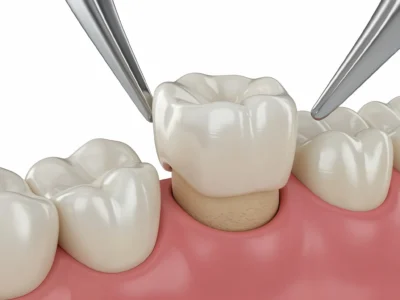
A dental crown looks simple from the outside. It is a tooth-shaped cover, cemented over a damaged or heavily restored tooth to protect it and restore function. Yet the success of a crown often comes down to something patients cannot see once it is in place: the fit.
When a crown fits properly, it tends to disappear into daily life. You chew without thinking about it. Your bite feels balanced. Floss passes through with a little resistance, much like it does on a healthy natural tooth. The gum around it stays calm. Years later, the crown may still be doing exactly what it was meant to do.
When a crown does not fit properly, small problems can start early and grow quietly. Food packs around the edge. The tooth feels high when you bite. Floss shreds. The gum stays irritated. Sometimes the patient notices right away. Sometimes the crown looks fine in the mirror, but trouble is already developing where the crown meets the tooth.
That border, often called the margin, is where much of the real story lives. A well-made crown needs to meet the prepared tooth closely enough to limit gaps, support the surrounding gum, and handle chewing forces without creating stress in the wrong places. Fit is not the only factor that matters in crown work, but it is one of the most important.
The crown is only as good as its relationship to the tooth
Patients sometimes think of a crown as a replacement tooth. In practice, it is more accurate to think of it as a custom shell that must work in partnership with the remaining tooth underneath. If that partnership is even slightly off, the result can be disappointing.
A crown must match the tooth preparation in several ways at once. It needs a precise margin, enough internal space for cement but not too much, proper contact with neighboring teeth, and a bite that does not interfere with normal chewing. It also has to respect the surrounding gum and bone. None of those details is cosmetic trivia. They influence comfort, cleanliness, durability, and long-term oral health.
Dentists who do a lot of crown work know that patients rarely complain by saying, “The marginal integrity seems off.” They say, “It feels weird when I bite.” Or, “Food keeps getting stuck there.” Or, “The gum around that tooth keeps bleeding.” Those everyday complaints often trace back to fit.
What “proper fit” actually means
The phrase gets used often, but it helps to break it down.
At the edge of the crown, the material should meet the tooth cleanly. No crown can be absolutely gap-free at a microscopic level, but the goal is a close, smooth adaptation. The larger the discrepancy at the margin, the more likely cement is to dissolve over time, bacteria to collect, and decay to begin under the crown.
Inside the crown, there needs to be enough room for the luting cement, but not so much that the crown sits loosely or unevenly. Too little space and the crown may not seat fully. Too much and support is compromised.
Between neighboring teeth, the contact should be snug enough to prevent food impaction but not so tight that floss shreds or cannot pass. That balance sounds simple, but it requires care. A contact that is too open can lead to constant trapping of fibrous food, inflamed gums, and irritation during meals. A contact that is too heavy can make cleaning difficult and leave the area tender.
The bite matters just as much. A crown that hits too hard can leave the tooth sore, especially if the tooth still has a nerve. On a root canal treated tooth, the patient may feel pressure rather than sensitivity, or they may notice that the jaw feels off. A high crown can also overload the tooth, the opposing tooth, or even the jaw joint over time.
Why small discrepancies create big problems
Dental work operates on a small scale. A flaw that seems minor in a lab or on an X-ray can be significant in the mouth because the mouth is a harsh environment. It is wet, warm, full of bacteria, under constant pressure, and used many times a day.
Think about what a back tooth goes through. A person who eats three meals and a couple of snacks may bring those teeth together thousands of times in a single day. Add clenching or grinding at night and the number rises sharply. If a crown is even slightly high, those repeated forces Dental Crowns keep landing on that one spot. The tooth ligament can become inflamed. The patient may describe it as soreness when chewing bread, a sharp twinge on one side, or the sense that the crown “hits first.”
Margins tell a similar story. A rough or open margin is not just an abstract defect. It becomes a plaque trap. Plaque near the gumline inflames soft tissue quickly. If the edge remains difficult to clean, the chronic inflammation can lead to bleeding, tenderness, and recession. If bacteria gain access under the crown, recurrent decay can form around the margin. Many crowns are replaced not because the ceramic broke, but because decay developed at the edge after years of leakage and plaque retention.
Gum health often reveals the truth
One of the earliest signs of a poorly fitting crown is persistent gum irritation around a single tooth. Patients may notice that one area bleeds when flossing while the rest of the mouth seems stable. In a practice setting, that pattern raises questions right away. Is the margin overcontoured? Is there excess cement trapped under the gum? Is the contact too open, allowing repeated food impaction? Is the crown contour making the area hard to clean?
A healthy crown should not create a chronic inflammatory zone around itself. The gum may be mildly tender for a short period after placement, especially if the work was deep near the gumline, but that should settle. If the tissue remains puffy or bleeds easily weeks later, something needs a closer look.
The shape of the crown matters here as much as the edge itself. A crown can be technically seated and still be bulky in the wrong place. Overcontoured crowns are common enough that many clinicians mention them when teaching younger dentists. If the crown bulges outward too much, especially near the gumline, the patient has a harder time sweeping plaque away with brushing and flossing. The tissue responds accordingly.
Bite problems are not always obvious at the appointment
A patient can leave the office thinking the crown feels mostly fine, then call two days later because chewing hurts. That does not necessarily mean anything was done carelessly. Local anesthesia can mask bite discrepancies at the appointment. A person who is numb often cannot judge subtle contacts well. Once feeling returns, the tooth may reveal that it is taking more force than it should.
This is one reason post-crown follow-up matters. Some adjustments are minor and quick. A careful bite check with thin articulating paper, combined with the patient’s own feedback, often resolves it. Ignoring it is the bigger risk. A high spot can keep the tooth ligament irritated, and in some cases it may contribute to cracks, sensitivity, or repeated discomfort that patients struggle to explain.
People who grind their teeth are especially unforgiving of small bite errors. Their chewing system already runs hot, so to speak. A crown that is slightly off can become the focal point of symptoms faster in that group. Sometimes the solution is not only adjusting the crown but also protecting it with a night guard.
Contacts that are too open or too tight
This is one of the least glamorous aspects of Dental Crowns, but it is one of the most practical. If a patient says, “Food gets stuck there every time I eat chicken,” that is valuable information. Food impaction is not just annoying. Over time it can injure the gum papilla between the teeth, cause soreness, and make the patient avoid chewing on that side.
Open contacts are more common than many people realize, especially when teeth have shifted slightly, the impression or scan was imperfect, or the lab contact was adjusted too much at delivery. Tight contacts create a different sort of frustration. Patients may report that floss snaps or shreds, or that the floss gets stuck and has to be pulled out forcefully. That can mean the contact needs refinement or the margin is rough.
A well-fitting crown should behave like a good natural tooth in daily maintenance. Cleaning around it should feel normal, not like a workaround.
The hidden danger of recurrent decay
One of the main reasons a crown fails is decay at the margin. This can surprise patients because they assume that once a tooth is crowned, it is somehow sealed off from future cavities. The crown itself cannot decay, but the tooth underneath absolutely can, especially at the edge where tooth structure remains exposed.
If the margin is poorly adapted, if cement washes out, or if plaque sits undisturbed around the border, bacteria can gradually undermine the tooth. Early on, there may be no pain at all. The decay advances quietly until an X-ray, a soft spot on exam, or a sudden fracture reveals the problem.
This risk is one reason crown replacement is sometimes necessary even when the visible crown still looks acceptable. From the patient’s perspective, that can feel frustrating. From a clinical perspective, it often reflects years of bacterial activity at a vulnerable interface.
How dentists try to get the fit right
A good fit starts long before the final crown is cemented. The tooth has to be prepared with enough reduction for the chosen material, clear margins, and a shape that allows the crown to seat fully without undercuts. Tissue control matters too. If the margin is hidden by bleeding or swollen gum tissue during the impression or digital scan, the final crown may be compromised before it is even made.
Temporary crowns play a larger role than many patients realize. A good temporary protects the tooth, keeps neighboring teeth from drifting, and gives clues about contour and bite. If the temporary repeatedly traps food or feels too high, that information can help before the final crown is delivered.
Whether the office uses conventional impressions or digital scanning, precision depends on technique. Digital systems have improved significantly, but they are not magic. Moisture, subgingival margins, reflective surfaces, and patient movement can still reduce accuracy. Labs also vary in how they design and finish crowns. A skilled lab technician can make a meaningful difference, especially in difficult cases with tight spacing, deep margins, or unusual bite patterns.
At delivery, the crown should be evaluated carefully before cementation whenever possible. The dentist checks seating, margins, contacts, contour, and occlusion. Radiographs are often used for posterior crowns if there is any question about full seating or margin adaptation. This step matters because once a crown is bonded or cemented definitively, corrections become more limited.
A few signs that deserve attention
Patients often benefit from knowing what is normal and what is not after receiving a crown. Mild temporary sensitivity can happen, especially to cold, and the gum can be a little sore for a short period. Persistent symptoms deserve review.
- Pain when biting that lasts beyond the first several days
- Food consistently packing next to the crown
- Bleeding gums around that one tooth after the initial healing period
- Floss shredding or getting stuck at the edge of the crown
- A bite that feels “high” or uneven once numbness has worn off
None of these signs automatically means the crown is a failure. Many are fixable if addressed early. The problem is delay. Patients sometimes tolerate an irritating crown for months, assuming they just need to get used to it. Often they do not.
Not every imperfect crown needs replacement
This is where judgment matters. Dentistry is full of gray zones. A crown can have a slightly less than ideal margin on an X-ray and still function well for years if the patient keeps it clean, the tissue is healthy, and there is no sign of leakage or decay. On the other hand, a crown that looks acceptable on casual inspection may need replacement because symptoms and clinical findings tell a different story.
A sensible approach weighs several factors: symptoms, radiographs, gum response, cleanability, age of the restoration, the patient’s cavity risk, and the strategic importance of the tooth. Replacing a crown always removes some material and carries cost and biological consequences. Dentists should not replace crowns casually. But neither should they dismiss ongoing signs that a crown is harming the tooth or surrounding tissue.
This is especially important for teeth that have already been heavily restored. Every time a restoration is redone, there is usually less natural tooth left. Preserving tooth structure remains one of the central themes in restorative care. The best crown is not simply the prettiest one. It is the one that protects the tooth effectively while causing the least long-term trouble.
Materials matter, but fit matters more
Patients often ask whether zirconia, porcelain fused to metal, lithium disilicate, or gold is best. Each material has its place. Gold remains remarkably kind to opposing teeth and can be incredibly durable. Zirconia is strong and widely used in posterior teeth. Lithium disilicate offers excellent esthetics in many cases. Porcelain fused to metal still solves certain problems well.
Yet a beautifully chosen material cannot rescue a poorly fitting restoration. An average-looking crown with excellent margins and a harmonious bite will usually outperform a gorgeous crown that is bulky, leaky, or high. Material selection affects strength, wear, esthetics, and required tooth reduction. Fit affects whether the whole restoration behaves properly in the mouth day after day.
The patient’s role after placement
Even the best-fitting crown benefits from good home care and routine review. Crowns fail faster in mouths where plaque control is weak, dry mouth is severe, sugar exposure is frequent, or grinding is uncontrolled. A crown is not a maintenance-free solution.
For most patients, the daily habits are straightforward:
- Brush thoroughly at the gumline around the crown
- Floss or clean between the teeth every day
- Return for checkups so margins, bite, and X-rays can be reviewed
- Mention any change in chewing comfort early
- Use a night guard if clenching or grinding is a known problem
That list is simple, but it makes a real difference. In practice, some failing crowns could probably have lasted several more years if small bite issues, trapped cement, or hygiene challenges had been caught sooner.
What a good crown feels like
Patients often ask what they should expect once the crown is settled. The best answer is surprisingly plain: it should feel uneventful. Not numb, not foreign, not fussy. It should let you chew normally, clean normally, and forget about it most of the time.
That tends to be the standard experienced clinicians aim for. A successful crown does not call attention to itself. It supports the tooth, fits into the bite without conflict, and allows the gum to remain healthy. When that happens, the crown has done more than restore shape. It has restored harmony.
A proper fit matters for Dental Crowns because the crown is not just a cap. It is an engineered interface between biology and materials, between the living tooth and the demands of daily function. If that interface is precise, the restoration has a fair chance to serve well for many years. If it is off, even by a little, the mouth usually finds a way to expose the problem.
Simple Dental Vermont
Address: 8914 S Vermont Ave, Los Angeles, CA 90044
Phone number: +13239493000
FAQ About Dental Crowns
How much do crowns cost per tooth?
In the United States, a single dental crown typically costs between $800 and $2,500 per tooth without insurance. The ultimate out-of-pocket price depends heavily on the crown material, the location of the tooth, and whether you have dental insurance coverage.
What is the downside of crowns on teeth?
The primary downside of a dental crown is that the procedure permanently removes natural tooth enamel to shape the tooth for the cap.
Why do dentists push for crowns?
Dentists recommend crowns because a large filling cannot provide enough strength when a tooth loses a major portion of its structure or faces heavy chewing pressure.